


Stop the Rust: Why Coating Thickness Matters in Garden Metal Products

Updated: Sep 2, 2025
Reducing rust complaints starts with one measurable factor: coating thickness. Learn how smart sourcing decisions can save your brand from costly returns.
If you’ve ever had to deal with a wave of customer complaints about “rust stains” or “corrosion spots” on garden metal products, you know this is more than just a cosmetic issue — it’s a reputation killer.
As a purchasing expert, I’ve watched countless companies fall into the trap of chasing lower unit costs while unknowingly inviting higher return rates. Outdoor garden products face year-round exposure to moisture, UV, salt, and physical impact. When your supplier cuts corners on coating — especially on galvanized steel — that’s when the problems begin.

This article dives deep into the practical ways procurement managers can reduce rust complaints by focusing on one often overlooked spec: coating film thickness. We’ll also answer common questions your customers are Googling every day:
How to get rust off outdoor metal?
What methods are used to reduce the corrosion of metals?
What are two methods to prevent rusting?
What are the two most important factors in preventing corrosion?
Let’s explore the science, sourcing strategies, and key factory practices that turn rust-prone products into long-lasting performers.
Table of Contents
How does coating thickness influence outdoor rust performance?
Rust isn’t just a surface flaw — it’s a signal of material breakdown. Thin coatings are like umbrellas with holes: they don’t do the job when weather hits hard.
Many low-cost suppliers still ship outdoor garden products with coatings as thin as 60–80μm. That’s barely sufficient for dry climates, let alone the wet, salt-laden air of coastal Europe. Once rust appears, consumers quickly lose trust, especially when it spreads after just one winter.
Products with coating thickness above 110–120μm, tested piece-by-piece using professional dry film thickness meters, have been shown to dramatically reduce rust complaints. Some advanced suppliers even reach 164μm on key structural parts — a significant margin above market average.
Coating Type | Typical Thickness | Expected Anti-Rust Performance |
Basic Electroplated | ~40μm | Low, prone to early rust |
Standard Powder Coated | 60–80μm | Average, short lifecycle in wet areas |
High-Density Powder + Galvanization | 110–160μm | Excellent for outdoor use |

When buying from overseas factories, always ask:
Is coating thickness measured per batch or per product?
Can they provide data logs from thickness gauges?
Do they adjust thickness based on product function or exposure level?
Without these assurances, you’re relying on luck. And luck doesn’t stop rust.
What are the proven methods to reduce corrosion in garden metal products?
Let’s face it — prevention is better (and cheaper) than after-sales firefighting. The best anti-corrosion strategies start during production, not post-delivery.
The most reliable methods include:
Thick & uniform powder coating using REACH-certified powders.
Full-weld joints instead of spot welds that expose metal edges.
96h salt spray testing for screws and fittings.
1000h UV aging test to simulate year-round exposure.
ISO 0–2 level adhesion testing, ensuring the coating stays on.
Even your packaging plays a role. Products that use EPE padding, EVA corners, and reinforced 5-layer cartons avoid coating chipping during shipment — another key trigger for early rust.

If your supplier can’t provide results from these tests, you’re buying blind. Your customers deserve better — and so does your brand.
Which two anti-rust strategies should buyers prioritize?
While there are dozens of small tips, two strategies account for 80% of rust prevention success:
Coating + Welding Synergy
Thick coatings only work if weld points aren’t exposed.
Prioritize full-weld construction, especially in corner joints and hinges.
Material Choice in Critical Areas
Avoid zinc-plated steel in moisture traps (e.g., door frames).
Upgrade to stainless steel in high-risk parts.
One case study involved a bin enclosure that rusted at the bottom panel seam after 4 months in Hamburg’s rainy climate. After switching to full-weld panels and boosting the coating to 132μm, the same design ran rust-free for over 18 months.
Don’t rely on “more paint.” Think strategically. Combine engineering, coating, and QA to get results.

What are the top two factors to watch when sourcing corrosion-resistant garden products?
Rust-resistant products aren’t magic — they’re the result of two main inputs:
Process Consistency
Are thickness gauges used daily?
Are test reports available for every batch?
Do production workers follow lean, repeatable routines?
Production Philosophy
Do they invest in pre-treatment?
Is sustainability prioritized, e.g., solar-powered coating lines?
Are they ISO9001, BSCI, and REACH-compliant?
A product is only as trustworthy as the system that makes it. Ask your factory these questions. If they dodge them — that’s your answer.
Sourcing Factor | Weak Signal | Strong Signal |
QA Data Access | “On request” | Instant + Verified |
Welding Detail | Spot Welds | Full Welds |
Coating Source | Unknown | REACH-Certified |
Material Spec | Zinc Only | Zinc + Stainless |
How should retailers handle rust issues if they do arise?
Despite best efforts, things sometimes slip through. But how you respond to rust complaints can define your customer experience.
One smart tactic: Have suppliers ready with engineering fallback plans.
Case in point: A retailer in Germany flagged pooling water inside a bin side panel. The supplier responded within 2 hours, modified the CAD drawing, and added 4 drainage holes. Future batches had zero recurrence.
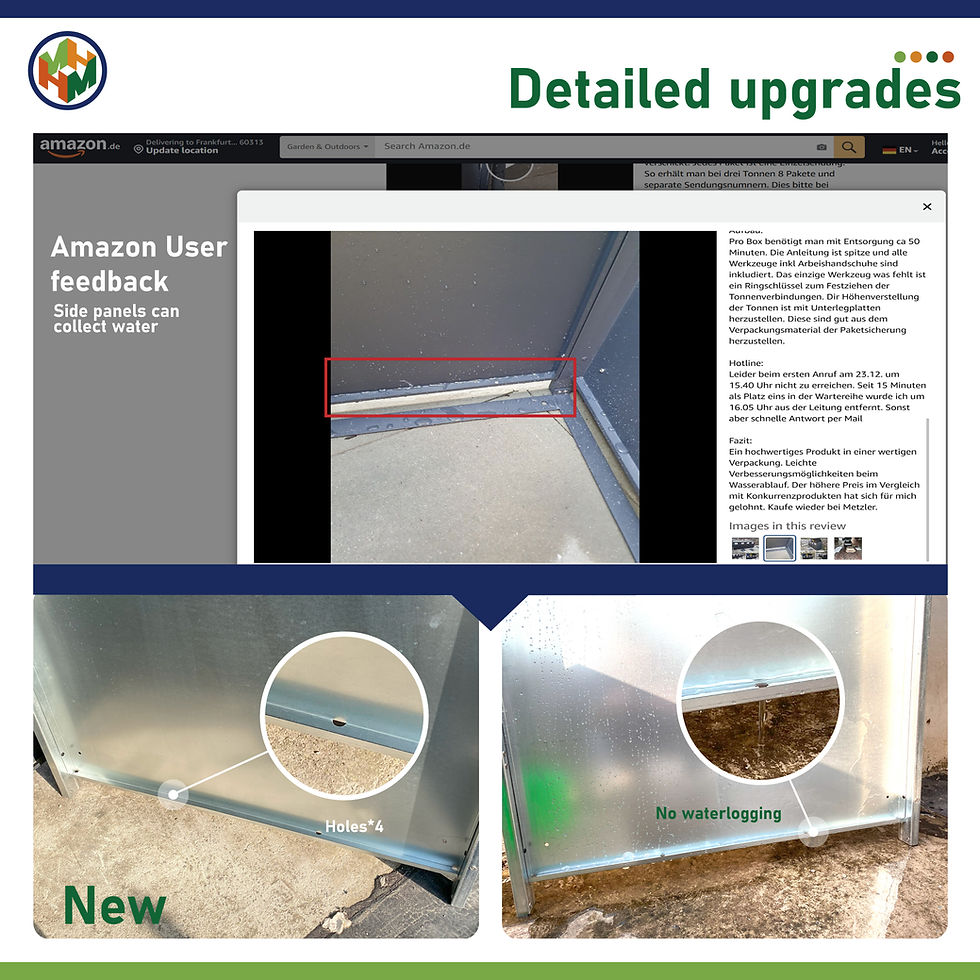
Be proactive. Your reputation depends on it.
Issue | Reactive Approach | Proactive Solution |
Water Pooling | Refund | Design Drainage |
Rust Flakes | Blame Shipper | Test & Recoat |
Joint Corrosion | Apology Email | Full Weld Specs |
Customers forgive mistakes. What they don’t forgive is silence.
Conclusion:
If rust is your recurring headache, start with thickness. Validate what’s on the spec sheet with what’s on the product.
Choosing suppliers who obsess over details — from microns of coating to joint design — is how you win long-term.
CEO of Hongmao Garden
Comments